
Does this intronic variant create a cryptic splice site?
Figure: illustrative, generated to demonstrate the method
The question
Does the candidate intronic variant activate a new splice junction and insert a pseudoexon into the mature transcript?
Method
Reference: GRCh38 / GENCODE v44
Alignment: STAR 2.7.11b, two-pass mode
Junction review: ggsashimi 1.1.5
Filters: MAPQ ≥ 20; uniquely mapped reads; junction support ≥ 5
What the figure shows
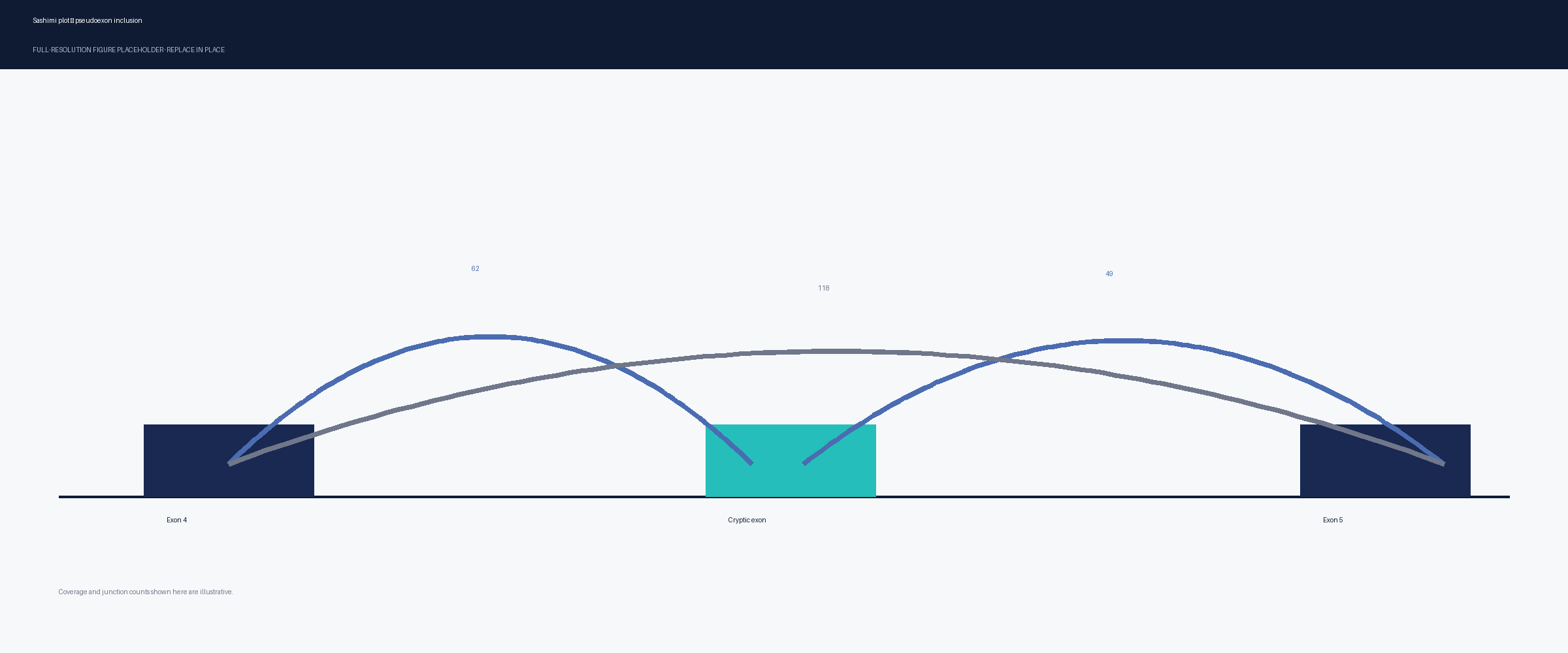
The candidate interval is supported by reads joining the upstream exon to the pseudoexon and the pseudoexon to the downstream exon. The canonical junction remains visible, indicating partial rather than complete splice redirection.
What follows from it
The pattern is consistent with cryptic exon inclusion. Broad intron retention and an isolated alignment artifact were considered; neither explains the paired junctions, so targeted RT-PCR would be the next validation step.
This analysis is what an aberrant splicing assessment delivers.